|
|

Friday, April 26, 2024
|
|


 Pilgrim Centers Jain Pilgrimages Rajasthan Sirohi
|
| MAIN | HOW TO REACH | HOTELS | CONTACTS | |
|
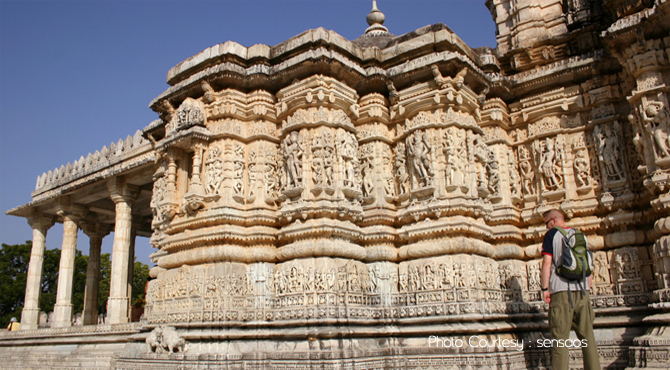
Named after the small village where they are located, these temples are surrounded by mango trees and wooded hills. These five temples are Vimal Vasahi (Shri Adi Nathji temple), Luna Vasahi (Shri Nemi Nathji temple), Pithalhar (Shri Rishabh Deoji temple), Khartar Vasahi (Shri Parshav Nathji temple) and Mahaveer Swami (Shri Mahaveer Swamiji temple). Among these temples, the Vimal Vasahi and Luna Vasahi temple are the most famous ones. Built in the Nagar style of temple architecture, it described as a storehouse of ancient manuscripts and treatise that indicates the influence of Shaivism and Jainism on the society during that period. The temple's every interior wall and pillar is covered with the most intricate carvings. Vimala Shah, Vastu Pala and Teja Pala were the people who contributed to build these grandiose temples. Vimal Vasahi (Shri Adi Nathji temple) Similar to the Sun Temple in Kashmir, it consists of one single main building and numerous other smaller buildings. The temple stands in an open courtyard surrounded by a corridor. The Rang mandap is the main hall supported by 12 decorated pillars with a breathtaking central dome and arches. It's ceiling is intricately carved with engraved designs of lotus-buds, petals, flowers and scenes from Jain and Hindu mythology. Female figurines playing musical instruments and 16 Vidhyadevis, each one holding her own symbol are carved on the pillars. The Navchowki is a collection of nine rectangular ceilings while Gudh Mandap is a simple hall with a magnificent doorway. The Gudh Mandap houses a black marble idol of the 22nd Jain Tirthankar Neminatha. There is a small portico known as Hasthishala (elephant Hall), just outside the entrance of this temple. Built by Prithivpal in 1147-59, it contains a figure of the patron, Vimala Shah, the chief minister of the Solanki king, on horseback. Pithalhar (Shri Rishabh Deoji temple) Mahavir Swami (Shri Mahavir Swamiji temple) Luna Vasahi (Shri Nemi Nathji temple) The main hall of the temple, Rang mandap, features a central dome from which hangs a big ornamental pendent with elaborate carvings. Inside the temple, there are 72 figures of Tirthankars in sitting posture and just below this are 360 small figures of Jain monks, arranged in circular group. The temple has 39 cells, each of which contains one or more images. The elephant cell or hathishala features 10 beautiful marble elephants, is the centre attraction. Another attraction of this temple is Kirthi Stambha - a big black stone pillar that stands on the left side of the temple.The Dilwara Jain Temples are open from 12 pm. to 3 pm. Entry is free. No photography is allowed inside the temple complex. |
NEARBY ATTRACTIONS |
|||||||||||||||||||||||||||
|
|||||||||||||||||||||||||||
|
|||||||||||||||||||||||||||||||||||
EXPLORE PLACES BY STATES |
||||||||||||||||||||||||||||||||||||||
|
||||||||||||||||||||||||||||||||||||||