|
|

Thursday, April 25, 2024
|
|


 Monuments Rock Marvels Tamil Nadu Mamallapuram (Mahabalipuram)
|
| MAIN | HOW TO REACH | HOTELS | CONTACTS | |
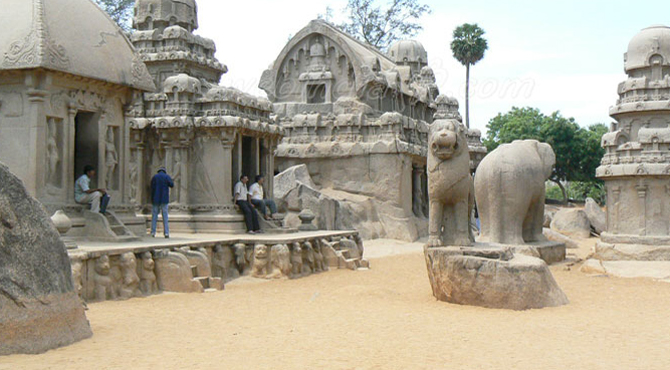
| The rock marvels are known for its, 'rathas' or monolithic rock temples cut out in the form of chariots; 'mandapams' or cut-in cave sanctuaries; temples constructed from multiple pieces and materials; and the bas-relief sculptures carved on large rocks. Of the temples the most famous are the Shore Temple and the 'Ratha' Cave Temples. The five ratha temples commonly known as the Pancha Rathas or five chariots stand majestically on the southernmost extreme of Mahabalipuram. Built by the Pallava ruler Narsimha Varman 1 (AD 630- 68) alias Mamalla in the 7th and 8th centuries, each temple is a monolith, carved out of a single rock. The temples which are different in forms, plans and elevations were cautiously cut out from a huge rock, sloping from south to north. These individual 'rathas' are named after the Pandava brothers Yudhistara (Dharmaraja), Arjuna, Bhima, Nakula & Sahadeva of the Epic Mahabharata and their wife Draupadi. Besides these rathas, the sculptures of an elephant (the vehicle of Indra), lion (the vehicle of Durga) and Nandi bull (the vehicle of Shiva) are structurally displayed. Though these temples are named after the Pandava brothers, they are not in any way related to Mahabharata. While the Dharmaraja, Arjuna and Draupadi rathas are square on plan, the Bhima ratha is rectangular and Nakula Sahadeva ratha apsidal. Facing the west are the Arjuna and Draupadi rathas which are dedicated to Lord Shiva and Durga respectively. The Draupadi ratha which is the smallest of the lot is a simple single storeyed hut like shrine. Goddess Durga is represented on the outside as well as inside walls of the shrine along with her attendants and devotees. Above the door there is an arch with the carving of a sea-monster with a crocodile body. Inside the shrine below her carved idol, a devotee is seen preparing to cut off his own head as a sacrifice to the goddess while another devotee is seen worshipping her. The ratha stand on a platform decorated with sculptures of elephants and lions on its sides. Arjuna ratha is a pyramidal structure layered with pillars and sculptures and (a dvitala vimana with a mukhamandapa) is topped with an octagonal dome. It looks similar to the gateways of South Indian temples. Inside the temple is the sculpture of a cross legged Shiva leaning on Nandi, his bull vehicle. Bhima Ratha is rectangular in plan with a barrel vaulted
roof. The long four columnned porch in the facade has seated lions carved
in front of the pillars. The lower part of the structure is unfinished. The Nakula-Sahadeva ratha with an apsidal plan and elevation faces south as against all other rathas which faces west. The sculpture of the elephant besides the Nakula Sahadeva ratha faces south and its rear part is in line with the ratha. The carved lion stands back to back to the elephant and faces north. The life size sculpture of the Nandi bull facing west is in a seated position on the east side behind Arjuna ratha. The group of rathas were executed as models of South
Indian temples and were not consecrated or blessed, hence were not used
for worship. The variety of architectural elements seen here definitely
can be termed as a source book on South Indian temple forms. The site
gives a delightful impression of the remarkable architecture of the Pallavas. Entry Fee: Rs. 10 for Indian citizens; Rs.250/- for others. Admission is free for all below the age of 15. No fee for still photography with handheld cameras. Rs. 25/- for videography with handheld cameras(a form may be filled to get permission). For all other types of photography and videography, |
||
VIDEO OF PANCH RATHAS-MAMALLAPURAM |
|
|
NEARBY ATTRACTIONS |
|||||||||||||||||||||||||||
|
|||||||||||||||||||||||||||
|
|||||||||||||||||||||||||||||||||||
EXPLORE PLACES BY STATES |
||||||||||||||||||||||||||||||||||||||
|
||||||||||||||||||||||||||||||||||||||